


STONE OF FORTUNE
Fortuna Elegance Story
Ideal Gift. Enriches the home and Brings Good Luck


AN EXTRAORDINARY OBJECT, Horn in Sculpted Design in White Marble.
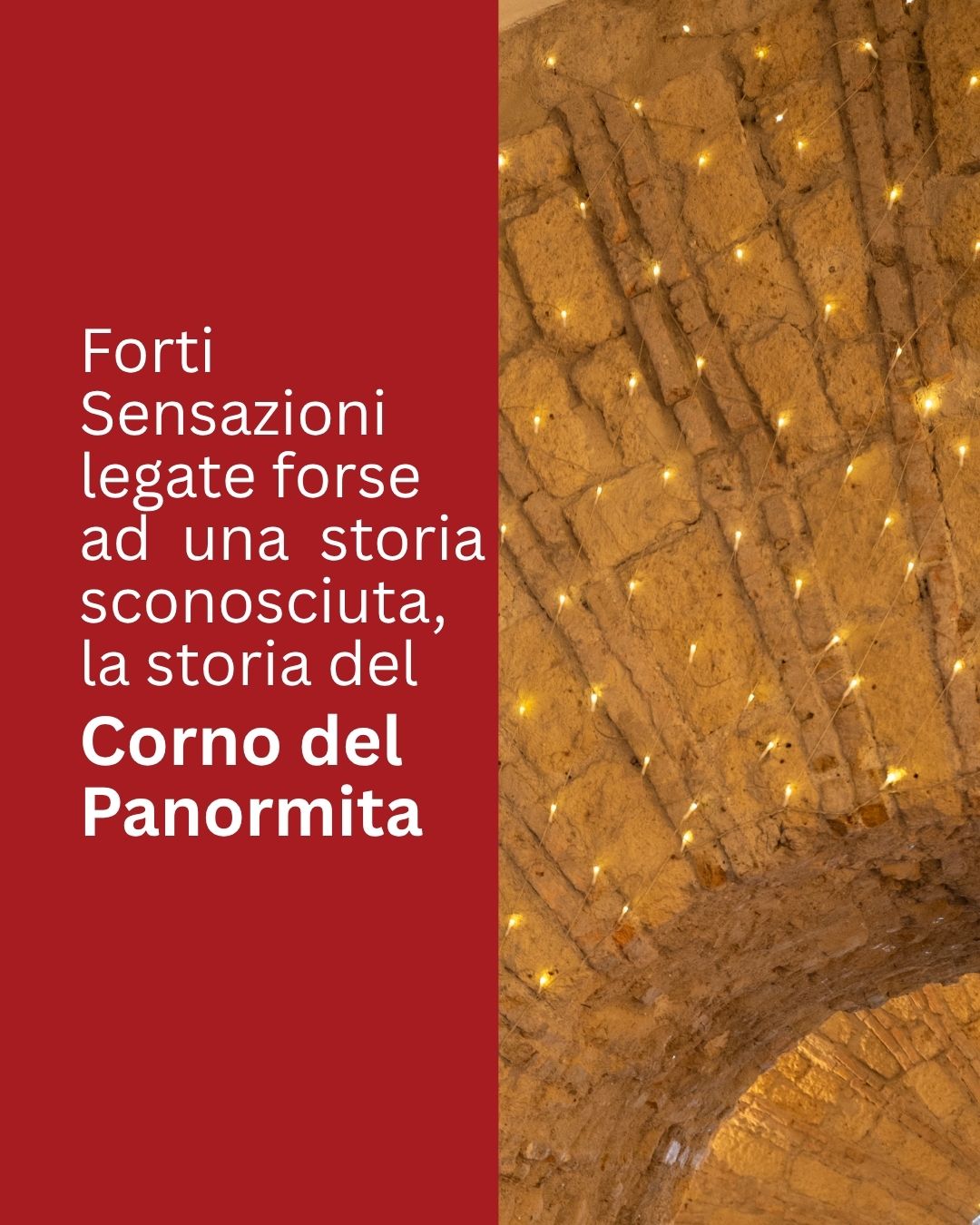
FROM AN EXTRAORDINARY PLACE, born from the Heart of the City, among the Millenary Foundations of the Palazzo del Panormita, behind the Body of Naples
WITH AN EXTRAORDINARY HISTORY, starting from the Neolithic and passing through the Greco-Roman era, the Horn in Design is the final stage of a millenary evolution.
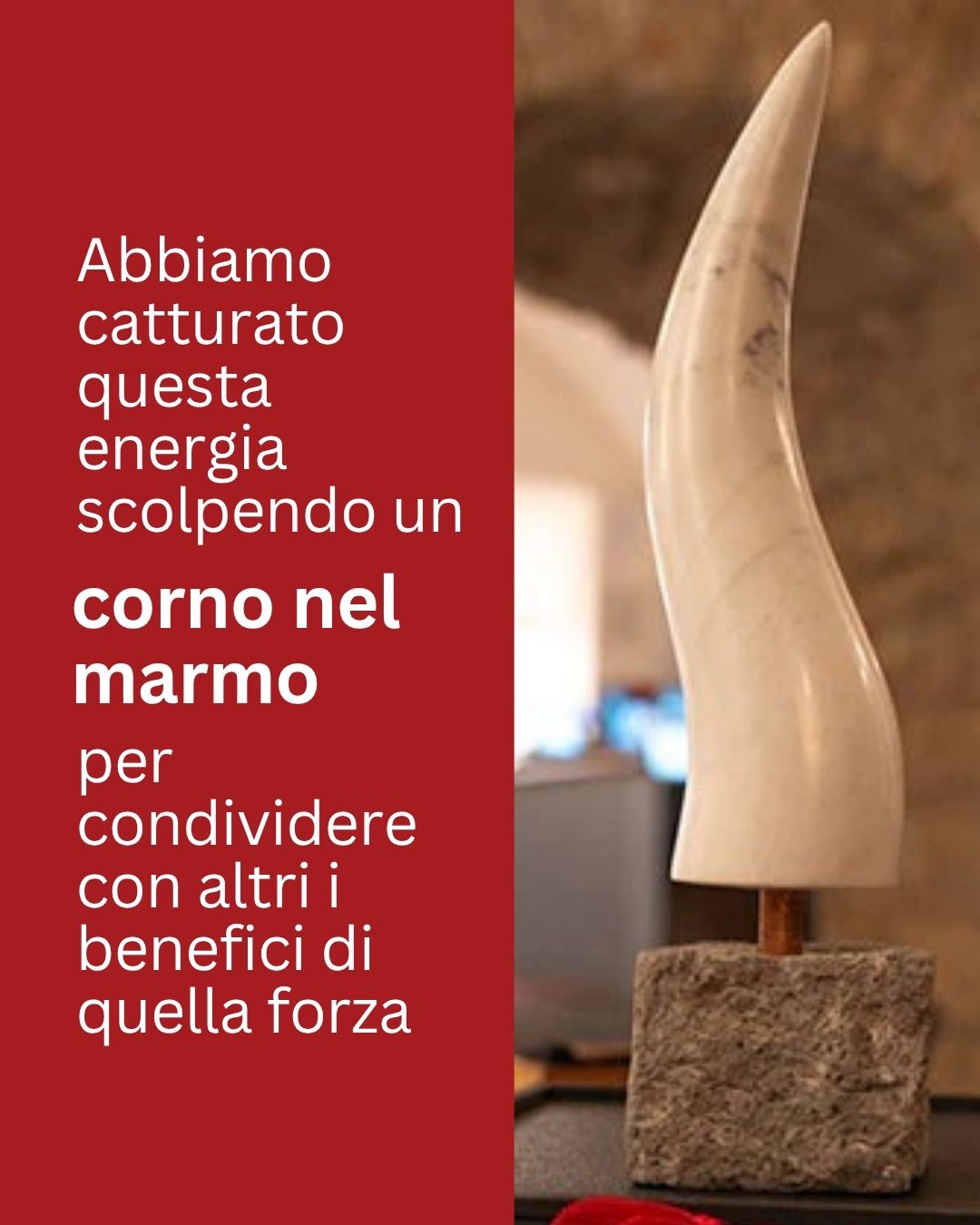
Beauty of Marble, Energy of Copper, Strength of Stone. Carved from a block of white Carrara marble using robotic technology. Hand-polished, it is supported by a Copper element on a base of Lava Stone, Tuff, or Marble.
Enriches with the Harmony of shapes, the Beauty of Marble, the Energy of materials, and referring to a Millenary History favors Fortune.
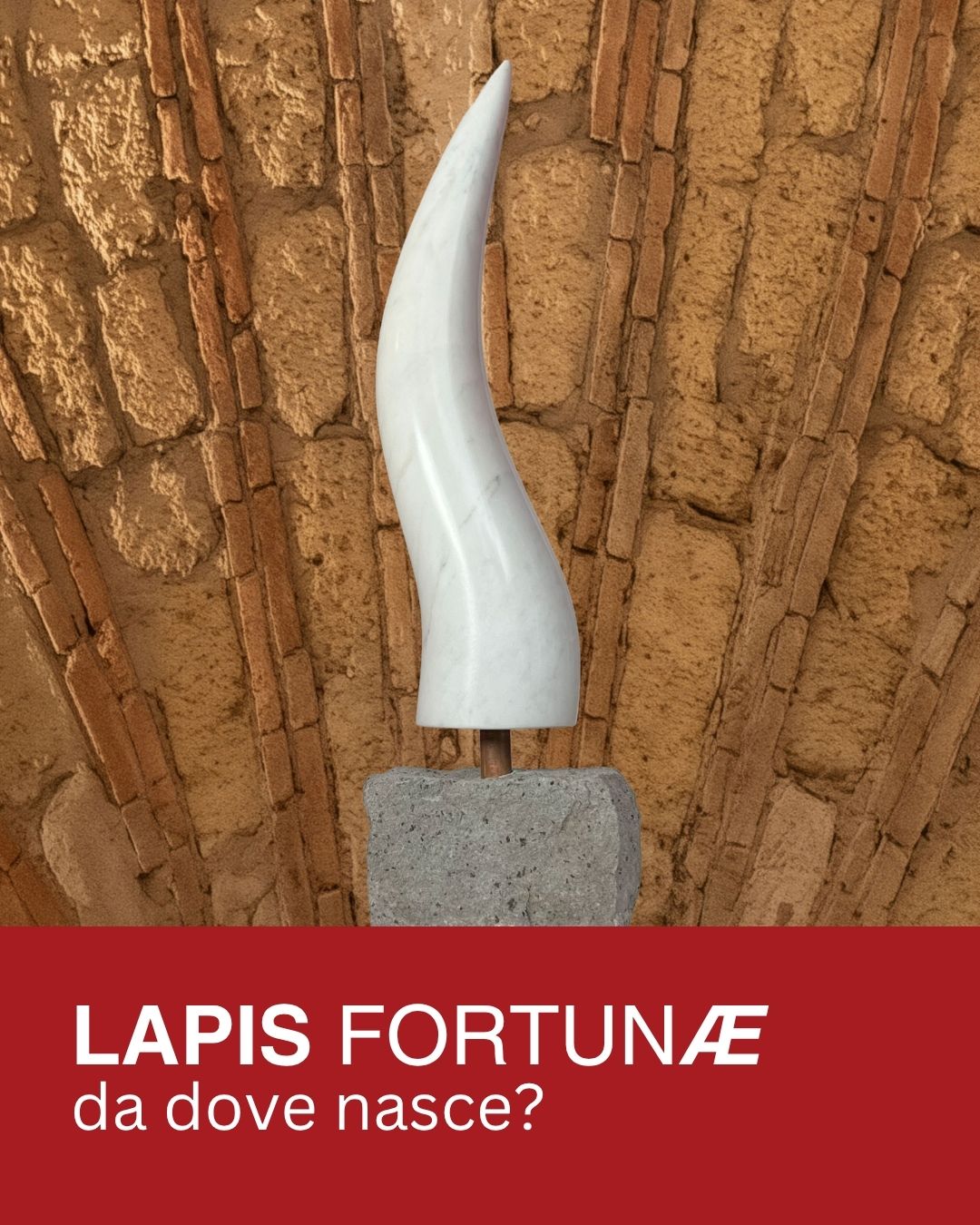


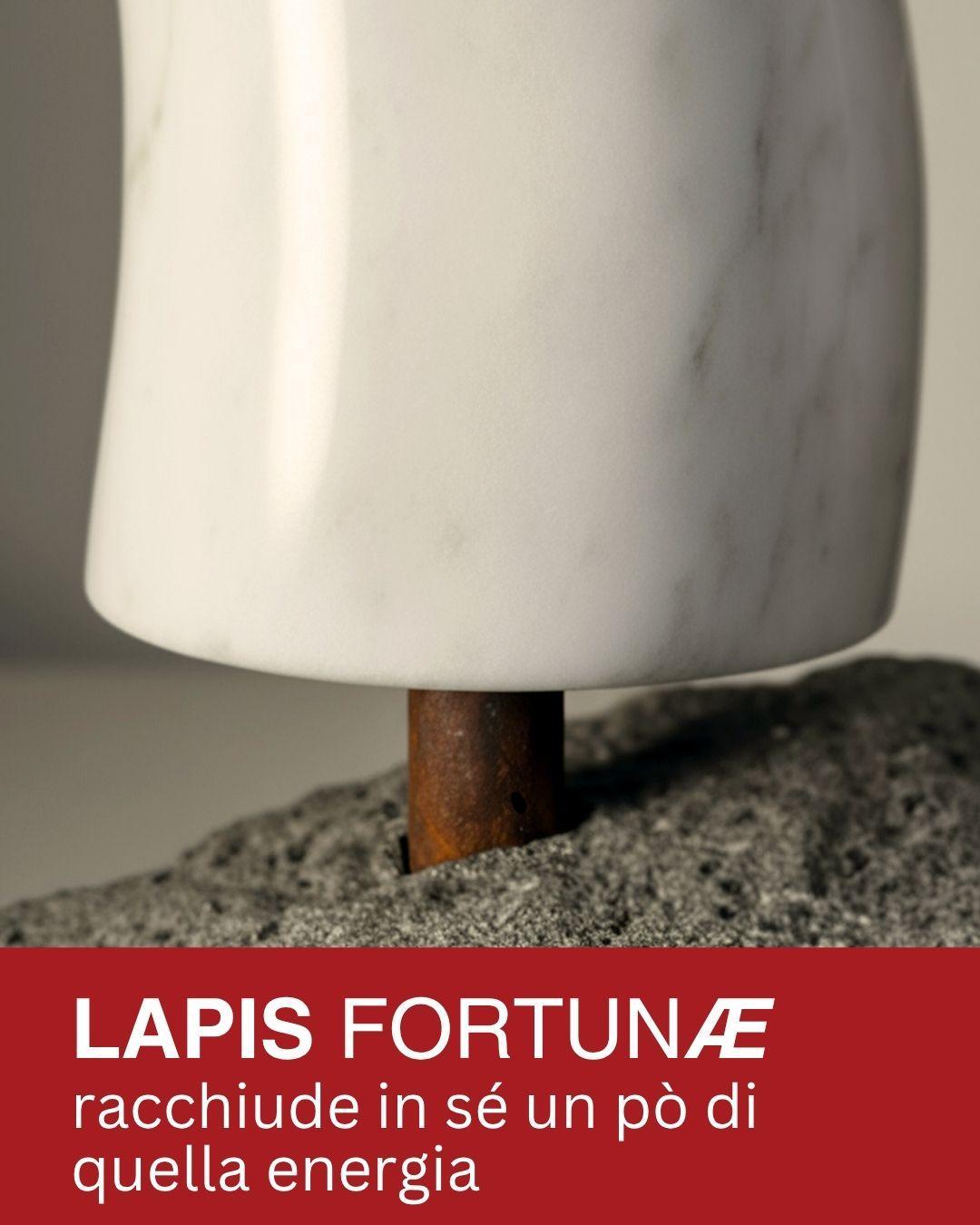


Unique design Italian tradition
Shop our exclusive collection


Monumental Horn Sculpture Design

The Italian Encyclopedia defines fortune as:
“a force that guides and alternates the destinies of men, to whom it blindly distributes happiness, well-being, wealth, or unhappiness and misfortune”.
Since always, men have thought that fortune influenced their lives.
However, the concept has changed from the pre-scientific era to today.
For the Romans, the whim and unpredictability of the goddess Fortuna could be influenced through virtues, temples, and sacrifices, but also with amulets such as the Phallus in erection.
In the Middle Ages, man becomes powerless in the face of the inscrutability of Divine Providence.
From the Humanism period until today, fortune is again influenceable thanks to courage and enterprise but also thanks to amulets. Even today, the Corno is an essential presence for the majority of Italians.
Romans
The Latin saying Fortes fortuna adiuvat (fortune favors the bold) explains the vision of fortune for the ancient Romans.

Fortuna was an important goddess of Olympus, blind and capricious but somehow influenceable:
- through virtus (behaviors guided by valor, honor, duty, courage, pietas);
- with sacrifices and numerous temples throughout the empire.
The goddess Fortuna was represented as a woman whose attributes could be:
- the wheel, representing the continuous changes of fate;
- the cornucopia, a horn from which wealth such as fruits, ears of grain, coins flow incessantly.
The ancestor of the modern lucky horn.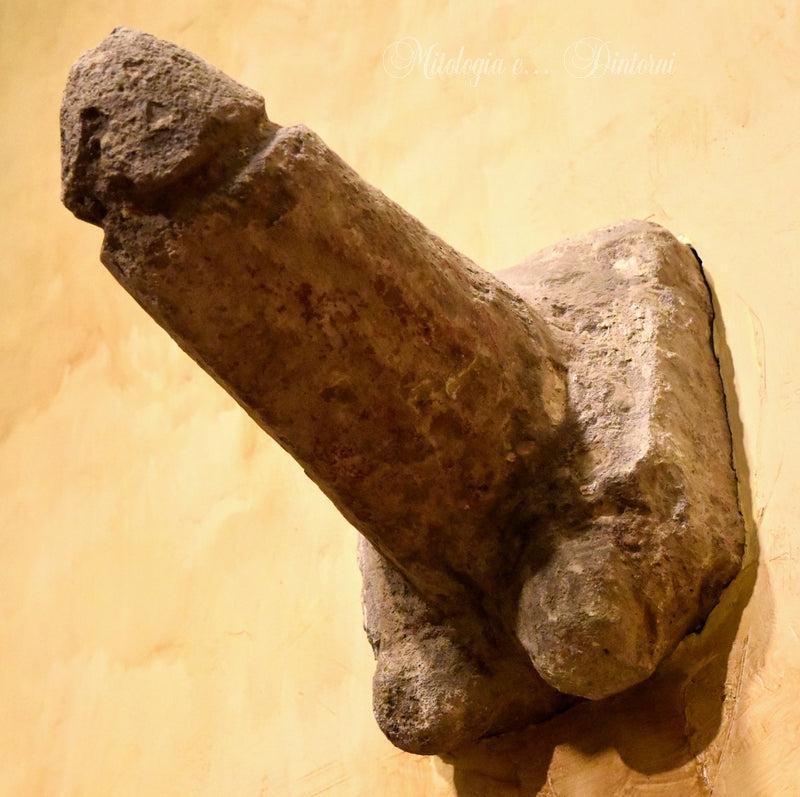 To propitiate good luck and protect against the evil eye (envious looks from bad people), the ancient Romans also used numerous amulets, among these the Phallus in erection. It was worn or placed inside and outside houses and shops.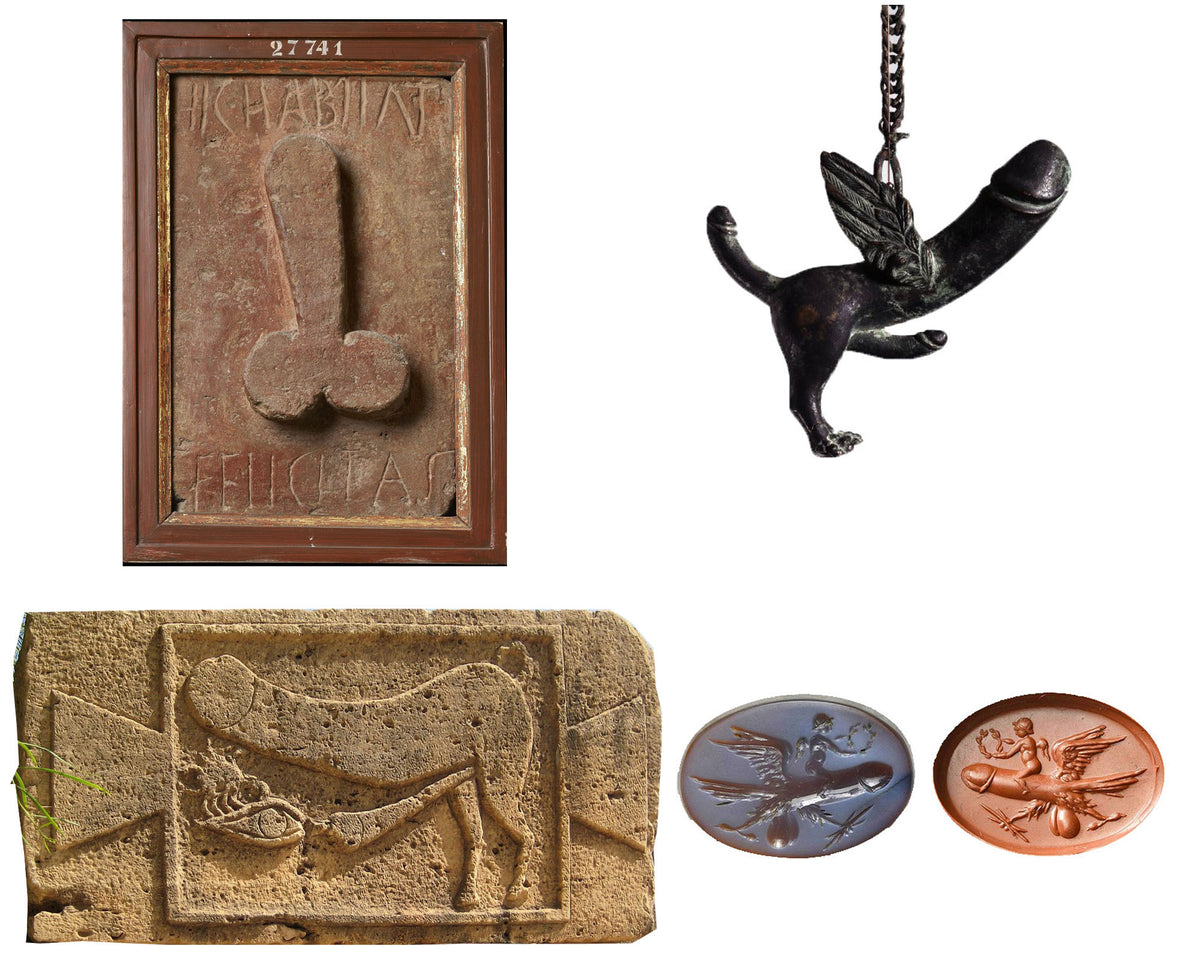
It is said that the transition from the Phallus to the horn happened in the Middle Ages with the banning of all references to the pleasures of the flesh. Although this belief is refuted by a letter from Lord Hamilton in which, even at the end of the 1700s, he describes the custom in Naples among children and women of popular classes to wear amulets with phallic symbols. 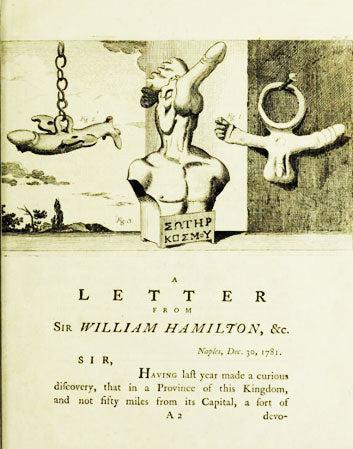 see The Winged Phallus of Pompeii: a journey into Ancient Roman culture
Middle Ages
From an unpredictable and capricious force, in the Middle Ages, where God is at the center of everything, fortune becomes a celestial intelligence, an angelic force appointed by God to govern earthly goods.
In the Middle Ages, fortune is no longer a pagan deity, but an instrument of Divine Providence, as illustrated by Dante. It is not a blind force, but a “minister” of God who distributes earthly goods according to a design inscrutable to man.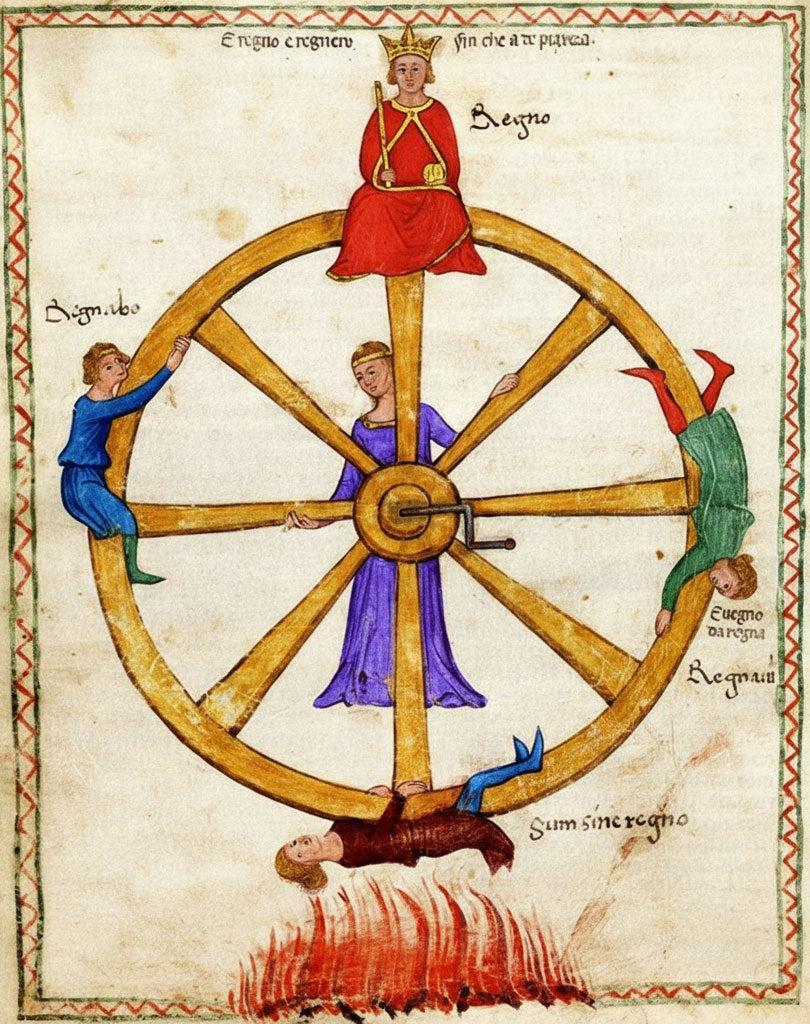
The famous wheel of fortune symbolizes the instability of the world, but with a moral meaning: it invites man not to rely on material goods, but to seek virtue.
Man cannot dominate fortune, but must face it with wisdom and resignation, accepting the divine will.
In short, medieval fortune is not chance, but fits into a providential order that tests man and pushes him to seek a virtuous life beyond earthly events.
Today
In the humanistic age, with man placed at the center of everything and with the study of the classics, fortune returns to being a whim of chance but influenceable by man.
Machiavelli in the 1500s, with a rhetorical device, describes fortune as a woman to indicate an unpredictable force to be dominated with virtue:
“I judge well this: that it is better to be impetuous than cautious; because Fortune is a woman, and it is necessary, if you want to keep her under, to beat and strike her. And it is seen that she lets herself be more conquered by these than by those who proceed coldly. And therefore always, like a woman, she is a friend of the young, because they are less cautious, more fierce, and command her with more audacity.”
This metaphor of fortune was very common in the Renaissance. In this context, the female figure represented the instability, the irrationality, and the unpredictable force of nature without connotations of physical violence but indicating boldness, impetus, determination. A metaphor we would never use today.
Today, in the era of artificial intelligence, fortune remains still an abstract and capricious force, but to some extent influenceable:
- thanks to one’s own qualities,
- the ability to seize opportunities,
- but also with superstitious rituals and amulets such as the Corno.
In Naples, the horn replaced the Phallus Greco-Roman as a good luck amulet in the Middle Ages with the banning of all references to carnal pleasures. 
(Archaeological Museum of Naples.)
The Catholic religion and common morality therefore led to the disappearance of the phallus as a pagan symbol and lucky charm and to its replacement with the horn.
However, this hypothesis is denied by a notable testimony at the end of the 18th century. In a letter from Naples dated December 31, 1781, William Hamilton describes the custom in Naples among children and women of popular classes of wearing amulets with phallic symbols clearly derived from the cult of Priapus of ancient Rome. The function of these amulets was naturally to protect against spells and the evil eye.
These were amulets made of silver, ivory, coral very similar to those found in the excavations of Herculaneum. Hamilton collected many amulets both modern and from Herculaneum to send them to the British Museum.
In the same letter, Hamilton testifies to the survival at the end of the 18th century of the Cult of Priapus in the city of Isernia and its fusion with the Christian cult. During the annual festival of the holy doctors Cosmas and Damian, phallic symbols of various types and sizes were sold in large quantities. These objects had a propitiatory and good luck function especially for the women who participated in the festival often to remedy their sterility.
Just as in antiquity farmers placed a large phallus, symbol of the god Priapus, to protect their fields, so even today large horns are indispensable in the countryside of Southern Italy.
The horn is given as a gift or worn as an amulet to protect against bad luck and the evil eye, that is, envy, jealousy, and malice.
It is very widespread: it is found in the homes of Neapolitans, in shops and restaurants.
The belief is that if it breaks, it has done its duty: it has absorbed the negative energy and neutralized it.
Today it is one of the most iconic symbols of Naples, often reinterpreted in a modern, artistic way or even in 3D printing.
 And now with LAPIS FORTUNÆ also in precious Carrara marble
Naples, 1435. Antonio Beccadelli, called il Panormita, watched the masons digging to complete the foundations of his new palace. The workers labored among the remains of medieval walls and fragments of Roman opus reticulatum, using the ancient structures as a base for the new construction.
King Alfonso the Magnanimous greatly appreciated il Panormita, his trusted advisor, and rewarded him generously. The humanist would later immortalize the magnificence of the Aragonese sovereign in the Liber de dictis et factis Alphonsi regis, a collection of anecdotes and maxims of the king. Times had changed since the turbulent days of the Hermaphroditus, when his erotic sonnets in Latin were condemned by the Church. His effigies were publicly burned in Bologna and Milan, while Pope Eugene IV even threatened excommunication for anyone found reading that work considered scandalous pagan immorality. In Naples, however, the verses still circulated, discreetly amusing the intellectuals of the court. Alfonso had created a protective environment for humanists, where ancient culture could be studied without the fears that afflicted other Italian courts.
Observing the ancient foundations, Beccadelli had an idea. His humanistic education had taken him far from the medieval conceptions that still dominated the most conservative circles of society. Where theologians saw only divine providence, he had rediscovered in the ancients the power of Fortune. Not only Cicero, but all classical literature—from Virgil to Ovid, from Homer to Sophocles—attested to the power of this capricious goddess. In Roman religion, she had been worshiped with temples and rites before Christianity erased everything under the aegis of divine will. From the classics, he had developed the idea that fortune could be partly influenced, not only with temples and sacrifices but also with amulets like the Phallus in erection. But he, having still a basis of religious education, decided to use a horn instead of a Phallus in erection.
"I have what is needed," said the humanist.
Weeks earlier, in Palermo, he had met an old Greek sculptor who showed him a small stone horn. The craftsman had smiled seeing his curiosity. "My grandfather carved Phalli in erection for Roman merchants," he had said. "He said that Fortune is like a capricious woman: the more openly you court her, the more she escapes you. The Phalli in erection among various amulets were the most powerful."
The old man had caressed the marble horn. "Then the Christians came and everything changed. We could no longer carve such explicit symbols without attracting the clergy’s wrath. But my father was clever: he discovered that the horn maintains the same symbolic power as the Phallus in erection, the same ability to attract divine favor, but with a more... diplomatic shape."
The man looked Beccadelli in the eyes. "The ancients knew that Fortune can be courted, not conquered. Not forced, as the Christians claim to do with prayer, but seduced with grace. The horn is the perfect compromise: it keeps the power of the ancient symbol but hides its true nature. Fortune appreciates the intelligence of those who know how to adapt to the times."
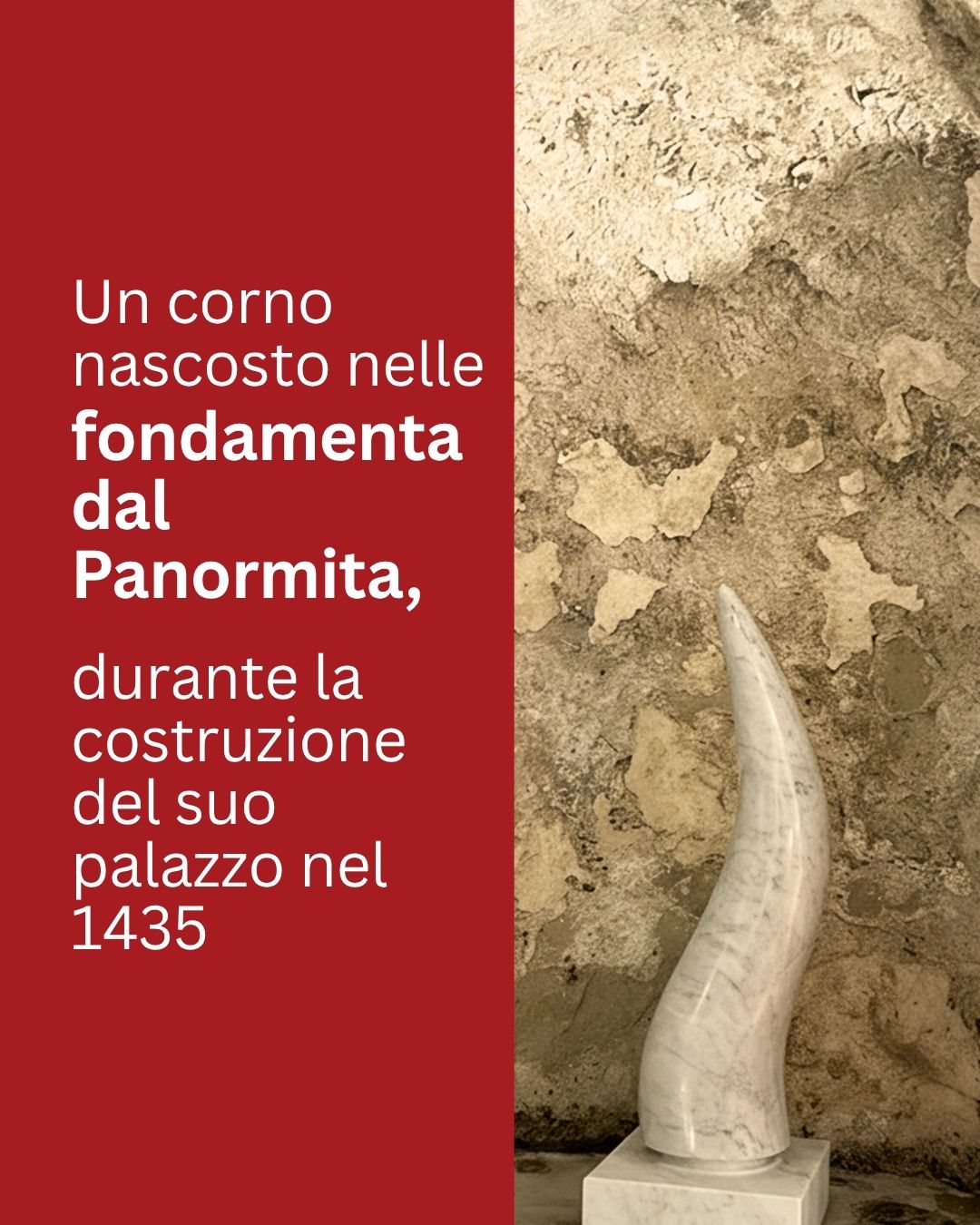
That evening, while the masons rested, Beccadelli went down among the foundations with a candle. The flame flickered on the fragments of Roman marble embedded in the new walls. He found the cornerstone and hid the small marble horn beside it.
Looking toward the sea, he glimpsed in the distance the profile of Castel dell'Ovo. Legend told that in its foundations Virgil himself had hidden a magic egg, and as long as it remained intact, the castle would be impregnable. For centuries that egg had protected the fortress. Now, thought the humanist, his stone horn would guarantee the palace fortune, success, and security.
In the following decades, the building would host some of the brightest intellectuals of Southern Humanism. Poets, philosophers, and humanists would gather in those halls, debating classical literature and composing works that would span centuries. Il Panormita’s palace would become a cultural reference point, where ideas circulated freely and ancient knowledge was reborn in new forms. Fortune, perhaps, had appreciated the tribute.
The foundations of the Palazzo del Panormita in Naples hide a legend.
A stone horn hidden in the foundations!
This palace was built on the remains of very ancient buildings. Even today, the structures of an ancient portico incorporated into the foundations can be seen.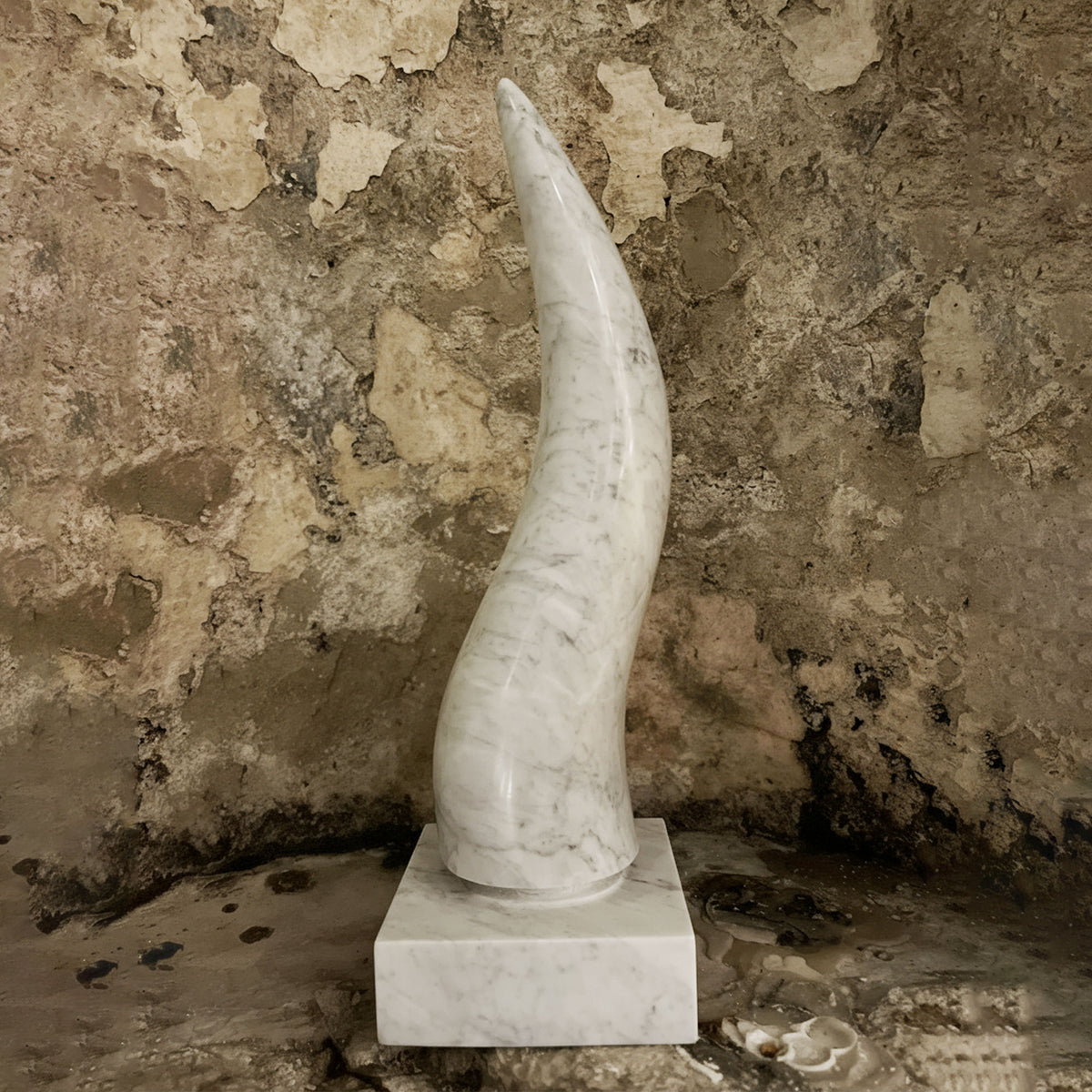
According to some scholars, the Temple of Isis stood in this area. In fact, in Greek and Roman Neapolis, this was the district inhabited by the Alexandrians, Greeks from Alexandria in Egypt.
A great testimony of this period is the Body of Naples, a representation of the god Nile, bearer of fertility, abundance, and wealth. An important element of the sculpture is the cornucopia, a horn from which riches such as fruits, ears of grain, and coins flow incessantly. 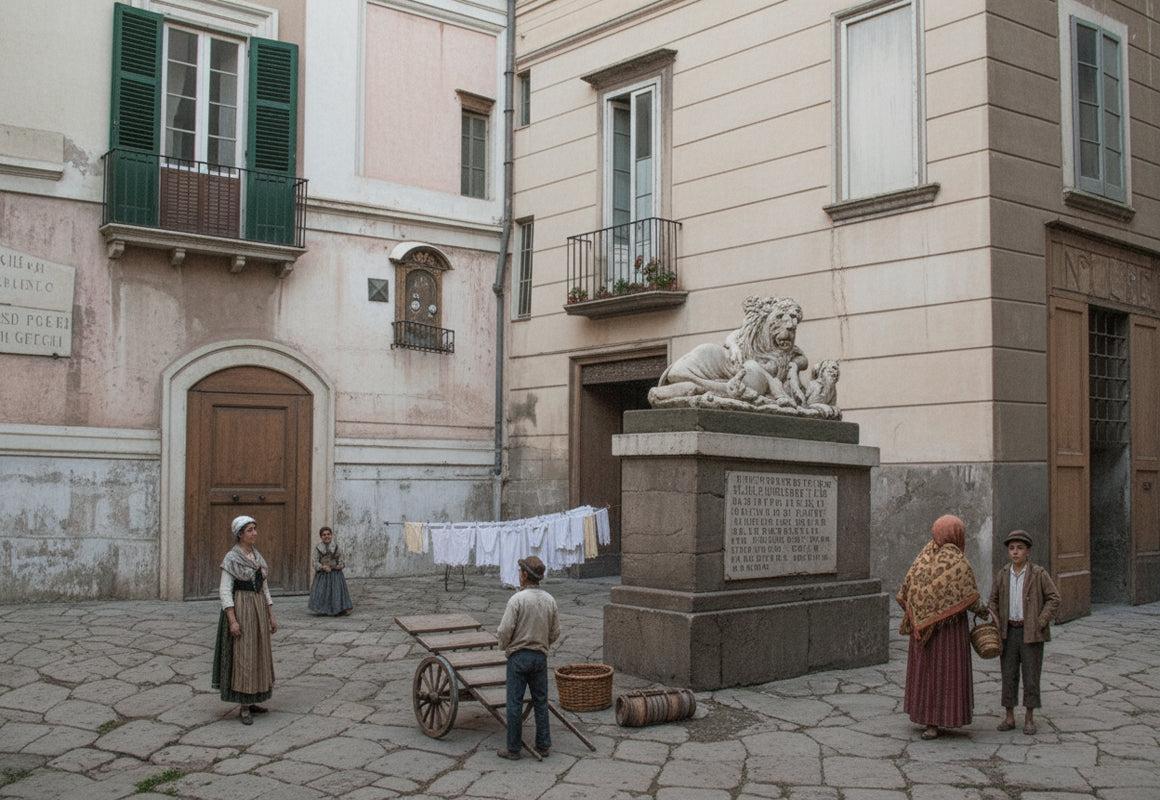
Panormita, a personality of great stature, was called to the court of King Ferrante of Aragon as a personal advisor at the beginning of the 1400s.
As an interpreter of his time, he was a passionate scholar of the Greek and Latin classics, a prominent figure of humanism and founder of the Pontanian Academy.
He is also known for his erotic sonnets in Latin, which, being in contrast with Catholic morality, were even burned in the public square in Bologna, his city of origin. In Naples and at the Aragonese court, however, his book Hermaphroditus  circulated and entertained.
But why is the legend of the horn linked to the Palazzo del Panormita?
Perhaps precisely because of his passion for the study of the classics, he decided to have his palace built right behind the statue of the god Nile, in the area of the Temple of Isis.
And perhaps for the same passion, to propitiate the goddess Fortuna, he decided to hide an amulet in the foundations of the palace, an heir to the phallus and the cornucopia: a Stone Horn.
Just as the egg, a symbol of solidity, supports the strength of the Castel dell’Ovo,  so the Palazzo del Panormita bases its fortune on a Marble Horn hidden in its foundations.
Many times it was not armies, but chance and natural events that changed history.
- Caesar (48 B.C.): after the defeat at Durrës, a storm prevented Pompey from pursuing him. Thanks to that contrary wind, Caesar had time to reorganize and win at Pharsalus.
- Alexander the Great (334 B.C.): during the crossing of the Granicus, the river swollen by rains made the battle almost desperate. Alexander risked his life but emerged victorious: one misstep in the waters would have ended his conquest.
- Philip II’s Invincible Armada (1588): the greatest naval fleet of its time was destroyed not by the English, but by the storms of the Atlantic. The “Fortune of the English” forever changed the European balance.
- Napoleon in Russia (1812): the “General Winter” destroyed the Grande Armée more than any battle. Frost, snow, and famine turned a triumphant expedition into a catastrophe.
Penicillin (1928) – Alexander Fleming noticed by chance that a bacterial culture had been contaminated by a mold that killed the bacteria. A laboratory oversight changed medicine.