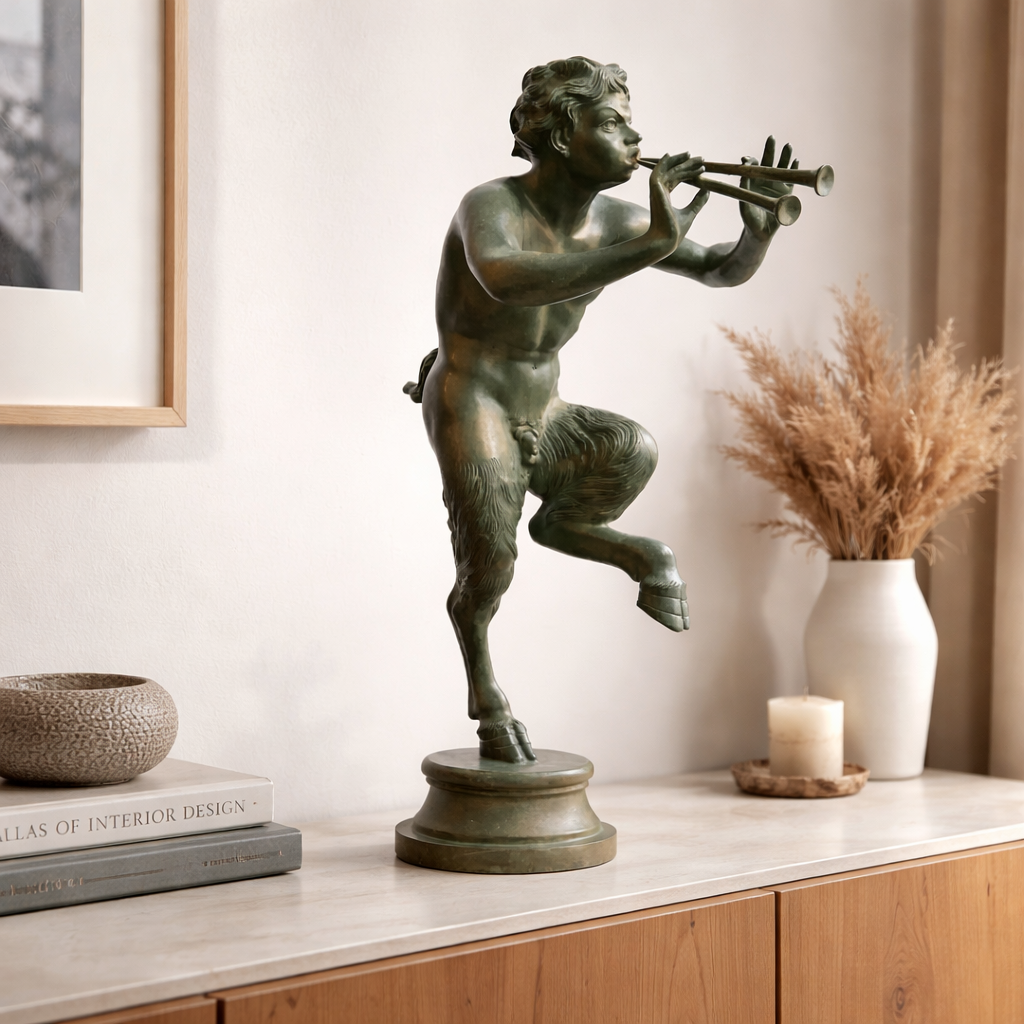

Bronze in the Interior
Bronze shifts with the light, bringing out contours, details, and deeper tones across the surface.
Lost-Wax Casting
The process begins with a wax model of the sculpture. It is enclosed in a mould and heated until the wax melts away, leaving an empty space for the molten bronze.
Once the bronze has cooled, the mould is opened and the sculpture is worked by hand: cleaned, chased, refined, and prepared for its final patina.
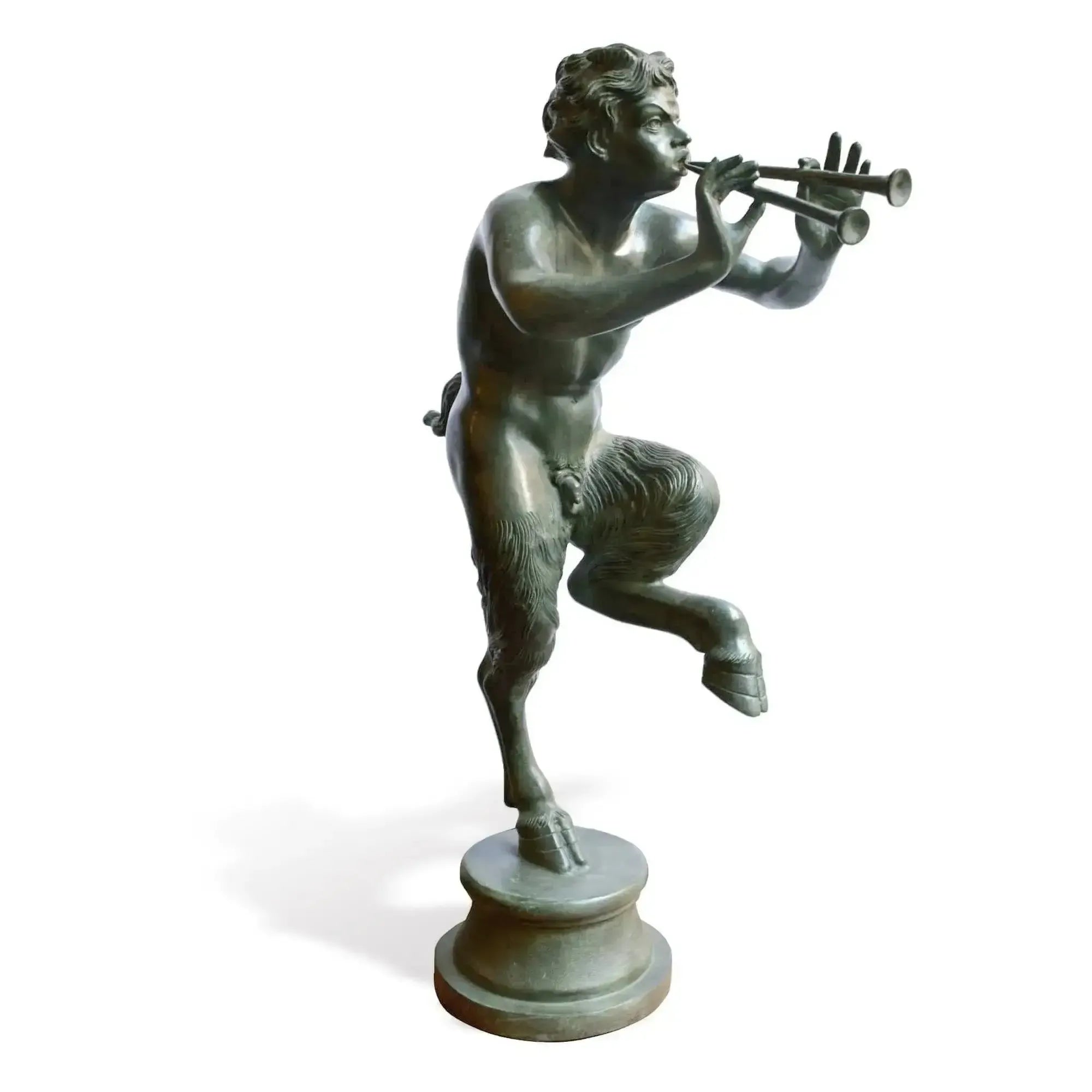
The Classical Subject
In classical art, a figure was rarely neutral. Gods, heroes, rulers, and allegorical figures carried recognizable stories and associations. In a contemporary interior, that history remains part of the object.
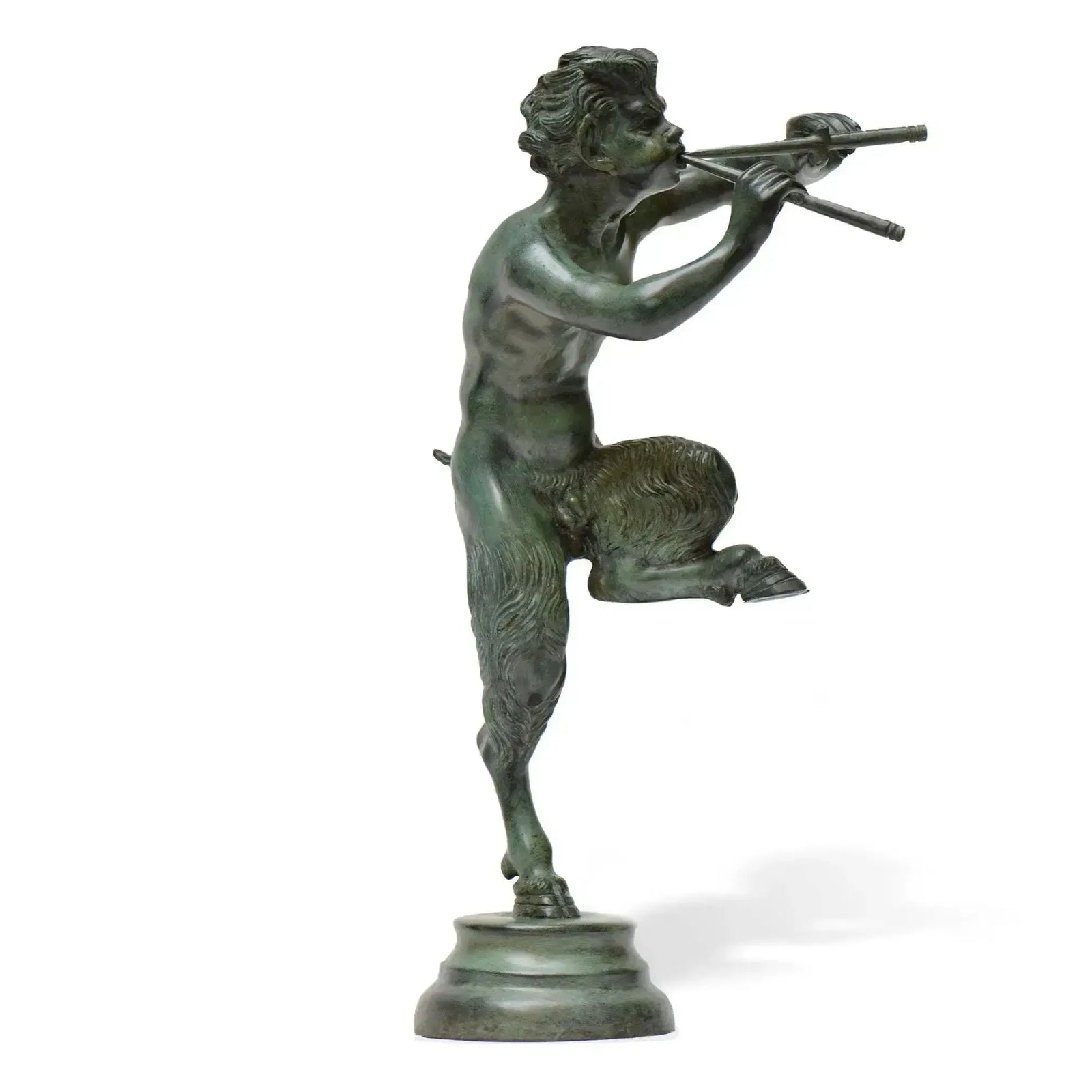
Fauno con Pifferi - Statua in Bronzo 71 cm
Details
Questa scultura rappresentante il fauno con pifferi, prende ispirazione da alcuni disegni trovati durante gli scavi di Pompei e da un affresco conservato al museo nazionale di Napoli.
Protagonista dell'opera è il dio ellenico, raffigurato con zampe caprine, coda e busto umano.
Il fauno è una figura mitologica greco-romana, spesso raffigurata come un dio della natura che suona i pifferi.
Nella mitologia greca è noto anche come Pan, ed è una divinità pastorale associata ai boschi e ai campi. Rappresenta la gioia, la goliardia, le feste, il divertimento e, in generale, la libertà della vita.
Caratteristiche
- Materiale: Bronzo, fusione a cera persa
- Base: Bronzo, fusione a cera persa
- Dimensioni: 71 x 36 x 24,5 cm
- Base: 18 cm
- Peso: 14 kg
- Prodotto in Italia
Curiosità Storiche
Il fauno era una divinità che secondo il Mito non risiedeva sull'Olimpo, bensì nei boschi e intimoriva chiunque lo disturbasse con la sua voce spaventosa. Il dio dei campi e dei pascoli è al centro di diverse leggende anche sulle sue origini. Una sua narrazione lo crede figlio di Zeus e la ninfa Callisto.
Rappresentava la natura nel suo complesso nel bene e nel male. Dio della fecondità e della libertà sfrenata, a lui veniva attribuita la nascita del flauto. Si racconta infatti, che la ninfa Siringa per sfuggirgli, invocò l'aiuto delle Naiadi e quindi fu da loro tramutata in canna palustre. Il fauno, ascoltando quel suono dato dal soffio del vento, decise di costruire lo strumento.
Manutenzione
Per mantenere la tua statua in bronzo sempre splendente, è consigliabile pulirla regolarmente con un panno morbido e asciutto. Evita assolutamente prodotti chimici aggressivi che potrebbero danneggiare la finitura. Quando necessario, utilizza la cera per ridare lucentezza all'opera.
The collection, backed by Museum Shop.
Grand Tour Editions is the sculpture collection of Museum Shop. This bronze collection brings together lost-wax casting, hand finishing in Italy, clear documentation, professional packaging, and direct assistance before and after purchase.
01Since 2004Experience with Italian art, archaeology, and cultural heritage.
Museum Shop has worked with objects inspired by Italian art, archaeology, museums, and cultural heritage since 2004. This experience supports the selection and presentation of every Grand Tour Editions sculpture.
02Made in ItalyCast and hand-finished in Italy.
Each bronze is cast in Italy using the lost-wax process, then chased, refined, and patinated by hand. The finishing work is done individually on every sculpture before it is prepared for delivery.
03Certificate of AuthenticityDocumentation accompanies the sculpture.
Each sculpture is part of a limited edition, individually numbered, and accompanied by a Certificate of Authenticity with the relevant material and production information.
04Professional Packaging & Safe DeliveryPrepared specifically for safe transport.
Professionally packed and shipped. We assume the transport risk until your sculpture is safely delivered.
05Personal AssistanceDirect support before and after purchase.
Before ordering, you can request additional photographs, dimensions, availability, shipping information, or clarification about the sculpture. Assistance continues through preparation and delivery.
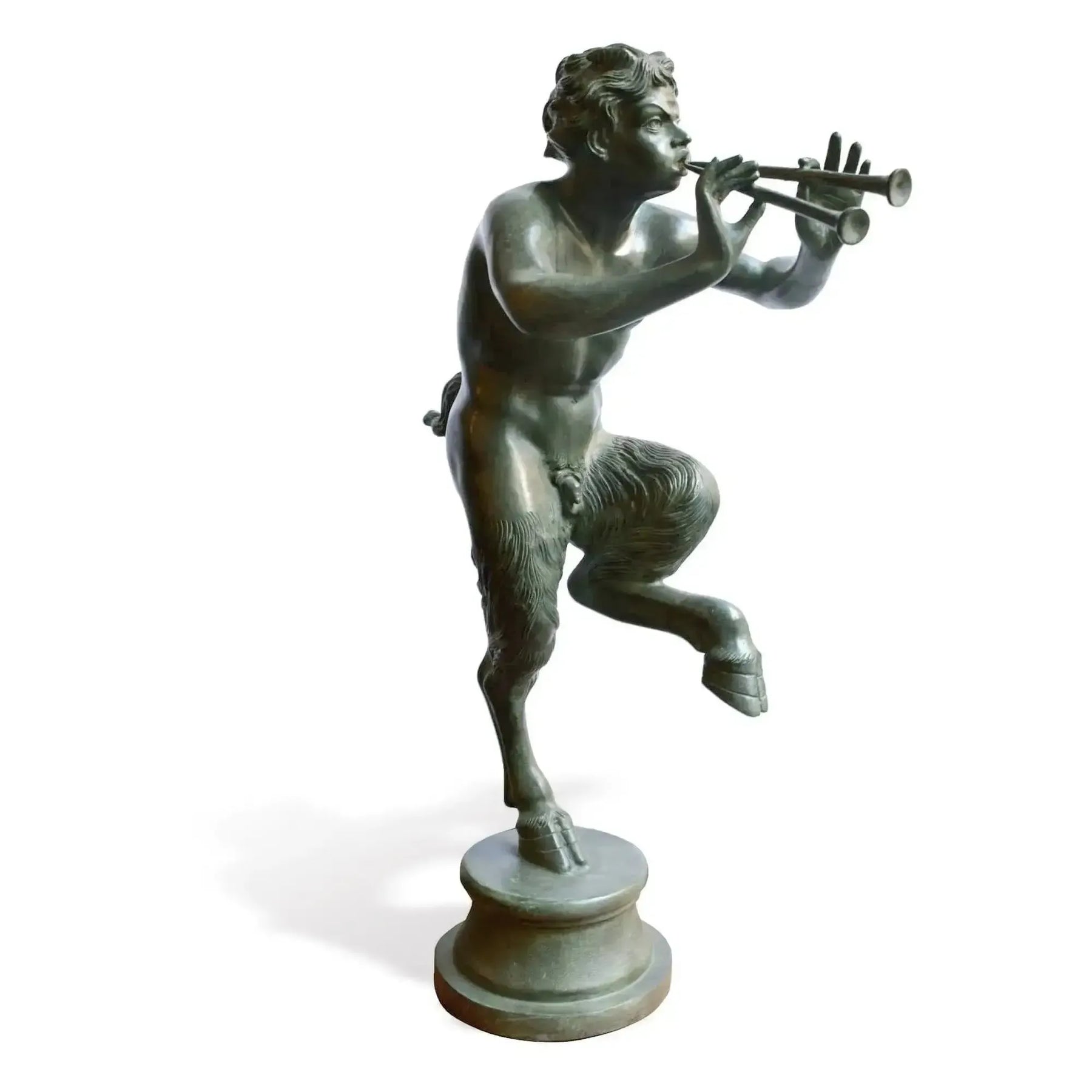
Bronze
Bronze has been used for sculpture since antiquity because it can hold fine detail while allowing forms that would be difficult to carve in stone. Its surface also responds to patination, giving the finished work depth and variation in tone.
Finished by Hand
Casting is only the beginning. Once the bronze leaves the mould, the surface is cleaned, chased, and refined by hand before the final patina is applied.
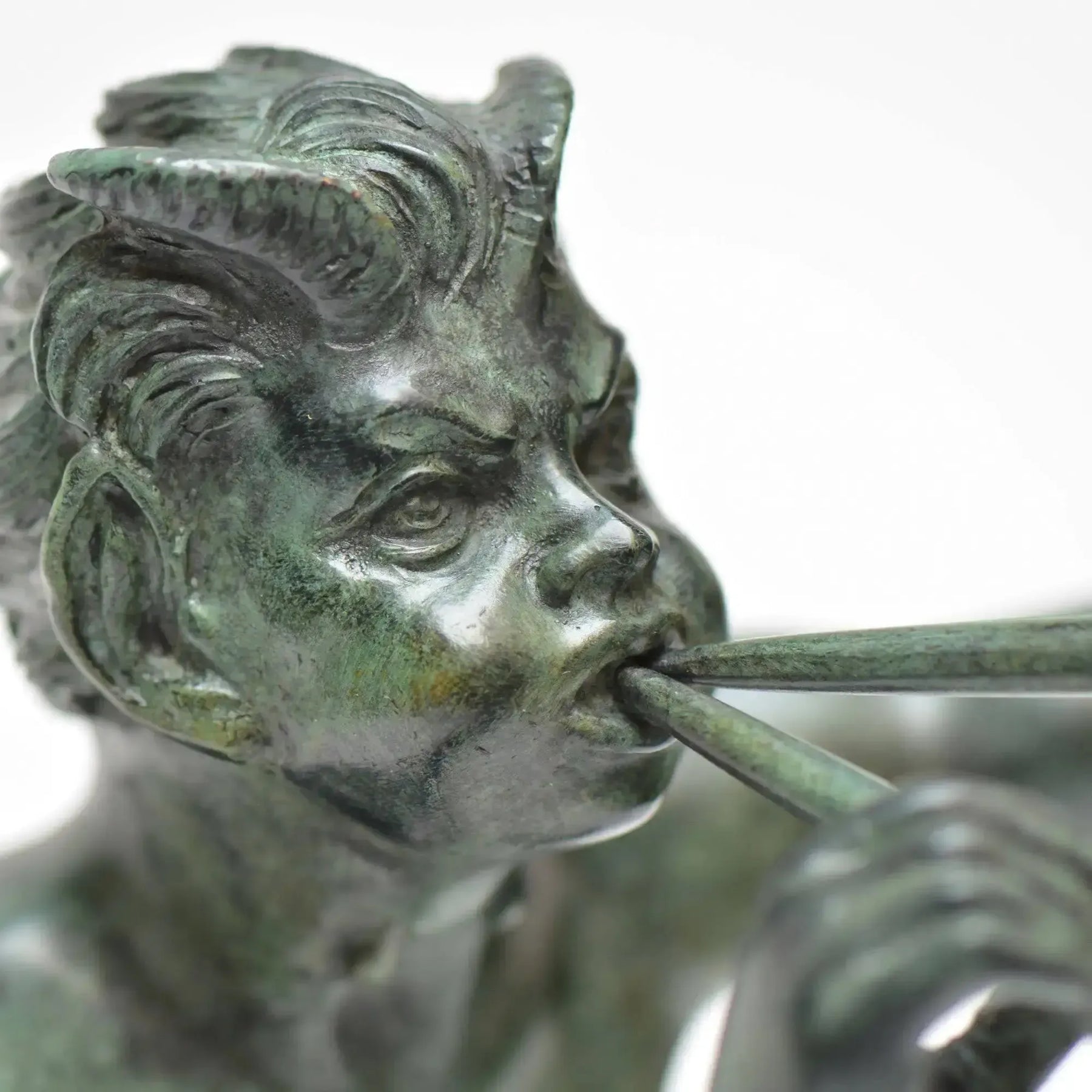
Applied by Hand
The patina gives the bronze its final tone and depth. Because this stage is done by hand, small differences from one casting to another are expected.
Made to reward a closer look.
Questa scultura rappresentante il fauno con pifferi, prende ispirazione da alcuni disegni trovati durante gli scavi di Pompei e da un affresco conservato al museo nazionale di Napoli.
Protagonista dell'opera è il dio ellenico, raffigurato con zampe caprine, coda e busto umano.
Il fauno è una figura mitologica greco-romana, spesso raffigurata come un dio della natura che suona i pifferi.
Nella mitologia greca è noto anche come Pan, ed è una divinità pastorale associata ai boschi e ai campi. Rappresenta la gioia, la goliardia, le feste, il divertimento e, in generale, la libertà della vita.
Caratteristiche
- Materiale: Bronzo, fusione a cera persa
- Base: Bronzo, fusione a cera persa
- Dimensioni: 71 x 36 x 24,5 cm
- Base: 18 cm
- Peso: 14 kg
- Prodotto in Italia
Curiosità Storiche
Il fauno era una divinità che secondo il Mito non risiedeva sull'Olimpo, bensì nei boschi e intimoriva chiunque lo disturbasse con la sua voce spaventosa. Il dio dei campi e dei pascoli è al centro di diverse leggende anche sulle sue origini. Una sua narrazione lo crede figlio di Zeus e la ninfa Callisto.
Rappresentava la natura nel suo complesso nel bene e nel male. Dio della fecondità e della libertà sfrenata, a lui veniva attribuita la nascita del flauto. Si racconta infatti, che la ninfa Siringa per sfuggirgli, invocò l'aiuto delle Naiadi e quindi fu da loro tramutata in canna palustre. Il fauno, ascoltando quel suono dato dal soffio del vento, decise di costruire lo strumento.
Manutenzione
Per mantenere la tua statua in bronzo sempre splendente, è consigliabile pulirla regolarmente con un panno morbido e asciutto. Evita assolutamente prodotti chimici aggressivi che potrebbero danneggiare la finitura. Quando necessario, utilizza la cera per ridare lucentezza all'opera.
No two surfaces are exactly alike.
Prepared in Italy. Tracked to your door.
The 20 business days refer to the preparation of your sculpture. Transit time begins once the piece has shipped. Free shipping and duties are included.
Frequently asked questions.
How is the sculpture made?
It is cast in bronze in Italy using the lost-wax process, then chased, refined, and patinated by hand.
Is each sculpture numbered?
Yes. Each sculpture belongs to a limited edition, is individually numbered, and is accompanied by a Certificate of Authenticity.
When will my sculpture ship?
Preparation takes 20 business days. Transit time begins once the sculpture has shipped.
Can I request additional photographs?
Yes. Contact us before purchasing to request additional photographs or information about the sculpture.
Will the patina be identical to the photographs?
Patination is done by hand, so small differences in tone and surface are normal from one casting to another.
Cast in Italy. Finished by hand.
Made using the lost-wax process, individually numbered, and certified.
Request product information
Tell us what you would like to know about this sculpture. We can provide additional information, photographs, availability, and shipping guidance.